
#CJEU shows excessive deference towards #socialpolicy in #publicprocurement: #socialhousing schemes may not be public contracts (C-197/11)
'Should the concept of “public works contracts” in Article 1(2)(b) of Directive 2004/18… be interpreted to mean that it is applicable to a scheme whereby, when a building or land subdivision authorisation is granted in respect of a project of a certain minimum size, it is linked by operation of law to a “social obligation” entailing the development of social housing units, amounting to a certain percentage of the project, which are subsequently to be sold at capped prices to a public institution, or with substitution by it?'
109 [...] it should be borne in mind that, in accordance with Article 1(2)(b) of Directive 2004/18, read in conjunction with Article 1(2)(a) thereof, public works contracts result where four criteria are fulfilled, that is to say, they are contracts for pecuniary interest, concluded in writing, between an economic operator and a contracting authority, which must have as their object either the execution, or both the design and execution, of works related to one of the activities within the meaning of Annex I to that directive or a work, or the realisation, by whatever means, of a work corresponding to the requirements specified by the contracting authority. [...]111 So far as concerns, in particular, the existence of a contract concluded in writing, it follows from the order for reference that the Constitutional Court is uncertain as to whether that criterion has been met in the present case, inasmuch as the social obligation entailing the development of social housing units is imposed in the absence of an agreement concluded between the housing authorities and the economic operator concerned. According to the order for reference, the social obligation is imposed directly on subdividers and developers by the Flemish Decree and is applicable to them merely because they own the land in relation to which they have applied for the grant of a building or land subdivision authorisation.112 In that regard, it should be borne in mind that, in order to establish that some kind of contractual relationship existed between an entity which could be regarded as a contracting authority and a subdivider or developer, the case-law of the Court requires [...] a development agreement to be concluded between the housing authorities and the economic operator in question for the purpose of determining the work to be undertaken by the economic operator and the terms and conditions relating thereto.113 Where such an agreement has been concluded, the fact that the development of social housing units is a requirement imposed directly by national legislation and that the party contracting with the authorities is necessarily the owner of the building land in question does not preclude the existence of a contractual relationship between the authorities and the developer in question (see, to that effect, Case C‑399/98 Ordine degli Architetti and Others [2001] ECR I‑5409, paragraphs 69 and 71).114 However, although it is true that Article 4.1.22, first subparagraph, of the Flemish Decree expressly requires an administration agreement to be concluded between the subdivider or developer and the social housing organisation, it is apparent from the order for reference that that agreement does not, in principle, regulate the relationship between the contracting authority and the economic operator concerned. In addition, such an agreement does not appear to concern the development of social housing units, but only the next stage which entails placing them on the market.115 It is therefore for the referring court to determine, in the light of all the applicable legislation and the relevant circumstances of the case in the main proceedings, whether the development of social housing units at issue in the main proceedings is within the framework of a contractual relationship between a contracting authority and an economic operator and whether the criteria referred to in paragraph 109 above have been met. (C-197/11 at paras 109 to 115, emphasis added).
The Court concludes with a tautology:116 [...] on the one hand, the application of Directive 2004/18 to public works contracts is nevertheless subject to the condition that the estimated value of the contract reaches the threshold set out in Article 7(c) of that directive and that, on the other, there are, as is apparent from the settled case-law of the Court, two types of contracts entered into by a public entity that do not fall within the scope of EU public procurement law.117 The first type of contracts are those concluded by a public entity with a person who is legally distinct from that entity [under the in-house exemption] where, at the same time, that entity exercises over the person concerned a control which is similar to that which it exercises over its own departments and where that person carries out the essential part of its activities with the entity or entities which control it (see Case C‑159/11 Ordine degli Ingegneri della Provincia di Lecce and Others [2012] ECR I‑0000, paragraph 32 and the case-law cited).118 The second type of contracts are those which establish cooperation between public entities with the aim of ensuring that a public task that they all have to perform is carried out. In those circumstances, the EU rules on public procurement are not applicable in so far as, in addition, such contracts are concluded exclusively by public entities, without the participation of a private party, no private provider of services is placed in a position of advantage vis-à-vis competitors and implementation of that cooperation is governed solely by considerations and requirements relating to the pursuit of objectives in the public interest (see Ordine degli Ingegneri della Provincia di Lecce and Others, paragraphs 34 and 35). (C-197/11 at paras 105 to 119).
In the light of all the foregoing considerations, the answer to the eleventh question in Case C‑203/11 is that the development of social housing units which are subsequently to be sold at capped prices to a public social housing institution, or with substitution of that institution for the service provider which developed those units, is covered by the concept of ‘public works contract’ contained in Article 1(2)(b) of Directive 2004/18 where the criteria set out in that provision have been met, a matter which falls to be determined by the referring court (C-197/11 at para 119, emphasis added).
GC on #quality assurance #standards in #publicprocurement: A knee-jerk reaction (T-288/11)
Should they require the production of certificates drawn up by independent bodies attesting the compliance of the economic operator with certain quality assurance standards, contracting authorities shall refer to quality assurance systems based on the relevant European standards series certified by bodies conforming to the European standards series concerning certification. They shall recognise equivalent certificates from bodies established in other Member States. They shall also accept other evidence of equivalent quality assurance measures from economic operators (emphasis added).
22 Before turning to the examination of the matter at hand, it is important at the outset to recall that, regarding the law applicable to procedures for the award of public service contracts undertaken by the institutions of the European Union, these procedures are governed by the provisions of Title V of Part I of the Financial Regulation as well as its Implementing Rules.
23 These provisions are based, of course, on the EU directives in this area (see, to that effect, judgment of 12 July 2007, Evropaïki Dynamiki / Commission, T-250/05, not published in the ECR, paragraph 1, and judgment of 9 September 2010, Evropaïki Dynamiki / EMCDDA, T-63/06, not published in the ECR, paragraph 4). However, Member States are the sole addressees of these directives and, therefore and in principle, these rules only govern public procurement by the institutions of the Member States. Such directives do not apply to public contracts awarded by the institutions of the Union on their own account, save for the question regarding the thresholds that determine the manner of publication, the choice of procedures and the applicable deadlines (judgment of 19 March 2010, Evropaïki Dynamiki / Commission, T-50/05, p. II-1071, paragraph 104).24 It follows that, in this case, in the examination of the first plea raised by the applicant, only the provisions of the Financial Regulation and the Implementing Rules need to be taken into consideration. Reversely, however, there is no need to take into account Article 49 of Directive 2004/18, cited by the applicant. (T-288/11 at paras 22 to 24, own translation from French).
38 [...] the requirement [of full ISO certification] does not appear disproportionate to the extent that, on the one hand, Article 137, paragraph 3a of the Implementing Rules provides that "[w]hen the contracting authorities require the production of certificates drawn up by independent certification bodies attesting that the economic operator complies with certain standards of quality assurance, they shall refer to quality assurance systems based on the relevant European standards certified by bodies conforming to the European standards series concerning certification."
39 Moreover, as the Commission has rightly pointed out in its defense, in the selection of tenderers, when it comes to ensuring their technical capacity, the ISO certification must necessarily target the agent itself and not the contract to be awarded. In fact, ISO 9001 specifies requirements for the quality management system when an organization needs to demonstrate its ability to provide a product that meets customer and regulatory and legal requirements. This standard of "quality" is applicable to the process that a company uses to make its products or services and so can attest to the effectiveness and quality of its organization and its ability to provide the deliverables covered by the contract.
40 It is true that, except for ISO certifications attesting to the quality of the organization of the company, there are ISO certifications to attest to the quality of products or specific projects. However, as pointed out by the Commission, only the former may be required under the selection criteria of a given tender. The latter can only be used, as appropriate, as a contract performance condition, since they can only be obtained once the contract is in place in order to certify that the project or the product has been made in accordance with ISO standards.
41 Contrary to what the applicant claims, the Court considers that the requirement of a certificate attesting that the bidders to comply with ISO [for all their maintenance activities] is proportionate to the subject of the contract. (T-288/11 at paras 38 to 41, own translation from French, emphasis added).
Even if rules on qualitative selection and non-discrimination requirements are formally complied with in a given tender, the adoption of certain award criteria could generate the same results as an infringement of those rules. That could be the case if the award criteria or their weighting favoured tenders submitted by certain operators on the basis of conditions that could not have been used for the purposes of the qualitative selection of candidates or that automatically exclude de facto a significant number of tenders (or even restrict the number of compliant tenders to one). For instance, they could do so by requiring the implementation of quality management systems for the purposes of the specific contract that would have proven excessive or irrelevant for the purposes of assessing the general suitability of the tenderer; or that exclude certain operators because they focus on requirements whose implementation would be impossible for tenderers that did not comply with these or other requirements beforehand, or whose partial implementation would not be economically viable with regard exclusively to the specific contract.[1] In these instances, the adoption of such award criteria could generate significant distortions or restrictions of competition—without, it must be admitted, generating a substantial potential for discrimination. Therefore, such a strategy should be banned and contracting authorities should guarantee that the award criteria and their weighting ensure equality of opportunity of all tenderers and, consequently, should not focus on or advantage compliance with criteria not restricted to the tender itself—ie criteria that undertakings would be in a position to comply with or not depending on previous or general conditions unrelated (or not specifically related) to the subject-matter of the contract.[2]
[1] In similar terms, rejecting the possibility of establishing general requirements that go further than required by the object of the contract, see P Trepte, Regulating Procurement. Understanding the Ends and Means of Public Procurement Regulation (Oxford, Oxford University Press, 2004) 197–8.
[2] For instance, if certifying compliance with a given quality standard for the product required the previous certification of the general operations of the undertaking as being compliant with a more general quality control system, and the tender documents did not require tenderers to be certified under that standard—then, giving better evaluations to certified than to non-certified products would generate a distortion of competition by de facto excluding or reducing the chances of award to non-certified undertakings (which would not be in a position to get the products certified only for the purposes of the tender). Therefore, by indirectly advantaging or requiring compliance with a condition not imposed at the qualitative selection stage, which refers to more general conditions unrelated to the specific contract, the contracting authority would be distorting competition in a way that should be declared to run contrary to the directives.
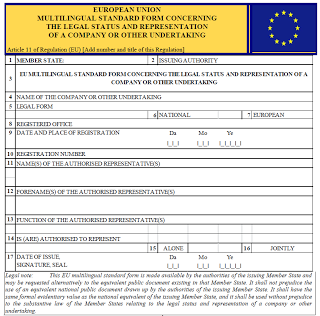
Beyond reasonable doubt?: Proposal for #simplification of the #acceptance of #publicdocuments in the #EU and #publicprocurement
Public sector reform in the UK: A procurement battlefield in the horizon?
#CJEU pushes for EU single fiscal territory in ban of Spanish 'cross-border' tax on unrealised capital gains (C-64/11 Commission v Spain)
Lack of an EU administrative #appeal does not broaden #GC and #CJEU review powers in #publicprocurement
The fact that the legislature did not establish an administrative appeal procedure, in the context of the procedure for the award of public contracts by the institutions of the European Union, cannot have any effect on the scope of the review carried out by the Courts of the European Union [which must be limited to checking that the rules governing the procedure and statement of reasons are complied with, the facts are correct and there is no manifest error of assessment or misuse of powers]. The existence or absence of such an appeal procedure is irrelevant to defining the scope of the Court’s review, since that review is different – both in its nature and the safeguards it presents – from an administrative appeal procedure (T-32/08 at 30).
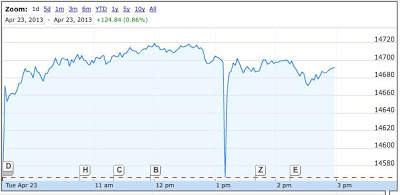
Stock manipulation via twitter: The new frontier of securities regulation?
(c) dissemination of information through the media, including the Internet, or by any other means, which gives, or is likely to give, false or misleading signals as to financial instruments, including the dissemination of rumours and false or misleading news, where the person who made the dissemination knew, or ought to have known, that the information was false or misleading.
La multa de la @CNCompetencia a #Correos y sus implicaciones en #contrataciónpública: ¿está todo dicho?
gracias a los privilegios de los que dispone Correos, que ha disfrutado tradicionalmente de un monopolio legal en buena parte del mercado y que tiene en la actualidad la condición de operador designado del Servicio Postal Universal (SPU), resulta evidente que Correos dispone de una posición de dominio, tanto en el mercado mayorista de acceso a la red postal de Correos, donde tiene una cuota del 100%, como en el mercado minorista de prestación de servicios postales de notificaciones administrativas.
la negativa de Correos a proporcionar servicios mayoristas de notificaciones administrativas supondría una barrera infranqueable a la entrada de otros operadores en la prestación de servicios de notificaciones administrativas a las Administraciones Públicas que exigen tal presunción en la contratación de sus servicios postales.
conviene recordar que, como ya ha señalado algún sector de la doctrina, la regulación de los contratos públicos ha dejado de poner el acento en la contemplación del interés público como elemento condicionante de la regulación de los contratos públicos para pasar a ponerlo en el cumplimiento de determinados principios entre los que destaca la garantía de la libre de concurrencia. Ello, que aparece consagrado en nuestro TRLCSP de modo expreso en los artículos 1 y 139, tiene su origen en las diferentes Directivas comunitarias, y, en lo que respecta al momento actual, en la Directiva 2004/18/CE del Consejo y el Parlamento Europeo. Pues bien, partiendo de la idea básica de que la regulación de los contratos públicos, ante todo debe garantizar la libre concurrencia de las empresas, tanto la Directiva como, en consecuencia, el TRLCSP, admiten la posibilidad de exigencia de títulos habilitantes para el ejercicio de actividades y que éstos sean requisito para poder contratar con un poder adjudicador. Pero este requisito, en la medida en que constituye una limitación al principio de libre concurrencia, así como al principio de igualdad de trato, debe ser interpretado de forma restrictiva. En consecuencia, la atribución a un único operador, en este caso Correos, de la posibilidad de realizar notificaciones administrativas debe ser interpretado de tal forma que la exigencia se ajuste al sentido literal de la norma que la establece. A tal respecto, de acuerdo con los preceptos de la Ley 43/2010 antes descritos, no puede entenderse que Correos sea el único operador postal que pueda realizar las notificaciones administrativas, sin perjuicio de las consideraciones que posteriormente realizaremos sobre la posibilidad de subcontratación del servicio, y que abundan en la necesidad de anular las cláusulas de los pliegos aquí impugnadas (FD 7º, énfasis añadido).
Es cierto que la Ley 43/2010 reconoce al operador dominante la facultad de presunción de veracidad y fehaciencia en la distribución, entrega y recepción o rehúse o imposibilidad de entrega de notificaciones de órganos administrativos y judiciales, tanto las realizadas por medios físicos, como telemáticos, y sin perjuicio de la aplicación, a los distintos supuestos de notificación, de lo dispuesto en la Ley 30/1992, de Régimen Jurídico de las Administraciones Públicas y del Procedimiento Administrativo Común. Sin embargo, las notificaciones practicadas por los demás operadores postales surtirán efecto de acuerdo con las normas de derecho común, y se practicarán de conformidad con el artículo 59 de la citada Ley procedimental administrativa.Esto significa que, como consecuencia de dicho proceso liberalizador y de la apertura general del mercado a los operadores postales, y por tanto a la competencia, los operadores postales con autorización singular para la prestación del servicio postal universal, así como el operador postal designado a tal efecto, podrán practicar notificaciones de órganos administrativos y judiciales. En este sentido, y en virtud del artículo 22 de la Ley 43/2010, los operadores postales podrán prestar libremente dicho servicio, ya sea directamente, ya sea a través del operador postal designado, ya sea a través de otros operadores.La diferencia en el actuar de los prestadores de servicios postales se encuentra en los efectos jurídicos atribuidos por la Ley a las notificaciones administrativas realizadas por los diferentes operadores postales. Por un lado, la actuación de notificación llevada a cabo por [Correos] ostentará por ley la presunción de veracidad y fehaciencia, en lo que respecta a la distribución, entrega y recepción o rehúse o imposibilidad de entrega de las notificaciones. Sin embargo, la actuación de notificación de órganos administrativos o judiciales llevada a cabo por el resto de operadores postales con autorización singular, tendrá efectos jurídicos de acuerdo con las normas de derecho privado, y en este sentido su realización carecerá de presunción de fehaciencia, debiéndose probar en el caso de ser cuestionado, por elementos probatorios de derecho privado.Por lo expuesto, la previsión recurrida vulnera el artículo 22 de la Ley 43/2010, al obligar a los operadores postales adjudicatarios a realizar las notificaciones administrativas a través [de Correos], dado que impiden y penalizan que dichas notificaciones las realicen los operadores postales autorizados a través de sus propios medios, utilizando los mecanismos jurídicos pertinentes en orden a poder probar la realización de los diferentes actos hasta llegar a la notificación. Igualmente quedan vulnerados los artículos 2 y 37 de dicha Ley 43/2010, al desarrollarse la prestación del servicio postal en ausencia de libre competencia, dado que se impide que operadores distintos [de Correos] lleven a cabo ese tipo de notificaciones por sí mismos, haciendo uso de los mecanismos jurídicos que permitan acreditar frente a terceros su realización (FD 8º, énfasis añadido).
#CJEU confirms that #IPlaw violations belong to the sphere of the outstanding contractual relationship (Systran, C-103/11-P)
63 [...] when hearing an action for compensation, the Community Courts must, before ruling on the substance of the dispute, as a preliminary issue determine their jurisdiction by carrying out an analysis to establish the character of the liability invoked and thus the very nature of the dispute in question.64 In doing that, those Courts cannot base their reasoning simply on the rules alleged by the parties.65 In that regard, [...] the Court of Justice has already held that the mere invocation of legal rules not flowing from a contract relevant in the case, but which are binding on the parties, cannot have the consequence of altering the contractual nature of the dispute and thus removing it from the jurisdiction of the competent court. If it were otherwise, the nature of the dispute and, consequently, the competent court, could be changed at the whim of the rules invoked by the parties, which would go against the rules on the jurisdiction of the various courts ratione materiae (Guigard v Commission, paragraph 43).66 However, the Community Courts are required to verify whether the action for compensation before them has as its subject-matter a claim for damages based objectively and overall on rights and obligations of a contractual nature or of a non-contractual nature. For those purposes, as the Advocate General has pointed out in points 49 and 50 of his Opinion, those Courts must examine, on an analysis of the various matters in the file, such as, for example, the rule of law allegedly infringed, the nature of the damage claimed, the conduct complained of and the legal relations between the parties in question, whether there exists between them a genuine contractual context, linked to the subject-matter of the dispute, the in-depth examination of which proves to be indispensable for the resolution of the said action.67 If a preliminary analysis of those matters shows that it is necessary to interpret the content of one or more contracts concluded between the parties in question in order to establish whether the applicant’s claims are well founded, those courts are required at that point to halt their examination of the dispute and declare that they have no jurisdiction to rule thereon in the absence of an arbitration clause in the said contracts. In such circumstances, examination of the action for compensation directed against the Community would imply the assessment of rights and obligations of a contractual nature which, pursuant to Article 240 EC, cannot be removed from the jurisdiction of the national courts (C-103/11-P, paras 63 to 67, emphasis added).
It is true [...] that it is not sufficient to allege simply any contractual relationship with the applicant or obligations of contractual origin not envisaging the conduct in dispute in order to be able to change the nature of the dispute by giving it a contractual basis. However, the fact remains that where, having regard to the content of the action for compensation against the Community, the interpretation of one or more contracts concluded between the parties in question appears to be indispensable in order to establish the legality or otherwise of the conduct by the institutions which is complained of, the dispute falls outside the jurisdiction of the Community Courts (C-103/11-P, para 80, emphasis added).
Should it, however, in fact come to a conflict between the values of contract law and non-contractual liability law in any particular case, whereby contract law denies liability which would subsist according to the provisions on noncontractual liability, then it is for the rules of contract law to assert priority if that is to be claimed in accord with the objective of the contract law rules. That is again the case if an application of the law on non-contractual liability in parallel with the corresponding contract law provision would deprive the latter of its effect. The contract law rule has priority so far as contract law actually claims it, whether expressly or merely by implication from the nature of things. Where contract law makes no such demand for the subsidiarity of non-contractual liability law, sub-paragraph (c) has no application and the principle of free concurrence of actions governs.
Whatever is left of the #EUCouncil? #CJEU 'Pringle' and the 'single European patent' judgments set a moving target
El informe de la @CNCompetencia sobre el Anteproyecto de Ley de racionalización y sostenibilidad de la administración local #ALRASOAL
Soft Administrative #EULaw? Some comments on Temple Lang's views on #DGComp Manual of Procedure
The Manual does not deal with submissions made to other parts of the Commission. It says nothing about the need for impartiality, or the duty to respect the Charter of Fundamental Rights, or the need to expect judicial review of all decisions. It allows officials to hold meetings without keeping minutes. It says too little about interim measures, and does nothing to reduce the two basic flaws in the Commission's procedure: the same officials draft the statement of objections and the decision, and none of the Commissioners who formally take the decision have seen the evidence or read the arguments. There are several examples of failure to deal with difficult questions, which are precisely those on which guidance is needed.

Rejection of Abnormally Low and Non-Compliant Tenders in EU Public Procurement: A Comparative View on Selected Jurisdictions
- Sánchez Graells, Albert, Rejection of Abnormally Low and Non-Compliant Tenders in EU Public Procurement: A Comparative View on Selected Jurisdictions (April 11, 2013). European Procurement Law Series, Vol 6 (forth). http://ssrn.com/abstract=224859
Cheaters beware: GC enforces strict #suspension rules in EU #publicprocurement (T-87/11)
Without prejudice to the application of penalties laid down in the contract, candidates or tenderers and contractors who have made false declarations, have made substantial errors or committed irregularities or fraud, or have been found in serious breach of their contractual obligations may be excluded from all contracts and grants financed by the Community budget for a maximum of five years from the date on which the infringement is established as confirmed following an adversarial procedure with the contractor.That period may be extended to 10 years in the event of a repeated offence within five years of the date referred to in the first subparagraph (emphasis added).
the applicant has seriously failed to meet its contractual obligations. In addition, it should be recalled that the Court of Auditors, which is one of the institutions of the Union, is dedicated to examining the legality and regularity of revenue and expenditure of the Union and any organ or body created by the EU and to ensure their sound financial management (Article 287, second subparagraph, TFEU). Particularly in view of these missions and the severity of the deficiencies attributable to the applicant, it should be considered that the latter, by his conduct undermined the image of the Court of Auditors and the European Union (T-87/11, para 81, own translation from French).
If you fine me, I have the right to appeal ~ even if someone else foots the bill (C-652/11)
CJEU strengthens #EULaw on #food #information: more #disclosure in the #consumers' interest
35. In so far as a foodstuff is unacceptable for human consumption and accordingly unfit therefor, it does not fulfill the food safety requirements under Article 14(5) of Regulation No 178/2002, and is, in any event, such as to prejudice the interests of consumers, the protection of whom, as stated in Article 5 of that regulation, is one of the objectives of food law.36. It follows from the above that, where food, though not injurious to human health, does not comply with the aforementioned food safety requirements because it is unfit for human consumption, national authorities may, as provided under the second subparagraph of Article 17(2) of Regulation No 178/2002, inform the public thereof in accordance with the requirements of Article 7 of Regulation No 882/2004 (emphasis added).
#GAO reports that there is scope for more competition in #US Defense #procurement
Stubborn #publicprocurement #aggregation: #Madrid City Council insists in tendering macrocontracts
Last November, the City Council of Madrid tendered a single contract for waste collection. The contract was intended to aggregate and consolidate the prior 13 separate outstanding contracts, which would have given the awardee responsibility for waste collection throughout the municipality, with the only exception of the city centre (for some reason). The contract was worth €542 million and the Council expected to save €11 million in the 8 years it would last.
The tender was a massive failure. Current contractors opposed a contract consolidation strategy that would exclude most of them due to their limited size and waste processing capacity. There was a strike to protest a change of waste management strategy that trade unions anticipated would cut jobs. More generally, the financial structure of the contract was considered nonviable by experts. In fact, only the largest incumbent (FCC) submitted a bid, which was disqualified because it exceeded the maximum bidding price by 34%. The tender was declared deserted and prior contracts were extended.
The situation is very unsatisfactory, as contract extension is not without problems. Contractual conditions designed several years ago are no longer adjusted to reality. Waste collection is now bad business, as the economic crisis has generated a reduction of household waste (at least, that is environmentally encouraging) and that means reduced pay for waste collection companies, since they are paid by collected ton of waste. FCC itself has announced job cuts, which the Madrid City Council opposes on the basis that the number of employees is a contract compliance clause the contractor cannot breach, despite the contract having been extended beyond its original duration and the conditions having changed significantly (an scenario that actually may make judges side with the contractor if this issue got to court). Trade unions are again promoting a new strike to protest the situation, which will result in no waste collection in Madrid for an indefinite period starting on the 15th of April.
Cynically, we could say that Madrid city is facing a waste wave if the situation does not get sorted out soon. And the prospects are gloomy. According to today's press releases, the City Council has decided that, if you cannot solve a problem, better make it bigger.
The Council has stubbornly decided to go deeper and broader in its (failed) contractual consolidation strategy and to tender a single macrocontract to consolidate the 39 outstanding for all public service activities of cleaning and maintenance of public spaces and green areas of the capital. The new service would run for 8 years (with a possible extension for 2 more), and is valued at €2.3 billion. With this new formula, the Council expects savings of 10% of current cleaning and gardening costs (a rough equivalent of €256 million throughout the life of the contract without the extension). Does this sound familiar?
Interestingly enough, the largest players in the cleaning, gardening and maintenance business are the same as in the waste collection side. It do not think it will be anyone's surprise if we hear again that only one or a very limited few of them participate in this second macrocontract, or that they submit financial offers in excess of the (dreamy?) expectations of the Madrid City Council.
Now, the open question is why a city council of one of the largest capitals in the EU insists in a failed strategy for the tendering of local services of such relevance? Are there no better ideas available in their in-house group of experts? Are they so stubborn that they are trying to prove they were right in the prior instance by failing again?
Also, I think that the Madrid experience offers some lessons for other city councils facing similar challenges (ie, the need to find new management strategies for public services that allow them to reduce costs) and that are thinking about contract aggregation and consolidation. I think that the easier one is that you cannot aim to consolidate beyond the size your market structure can reasonably digest. The second one is that you cannot intend to award non-profitable contracts. And, the hardest one, that some creative thinking is needed. Would anyone publish a call for ideas? I would definitely be tempted to contribute.